
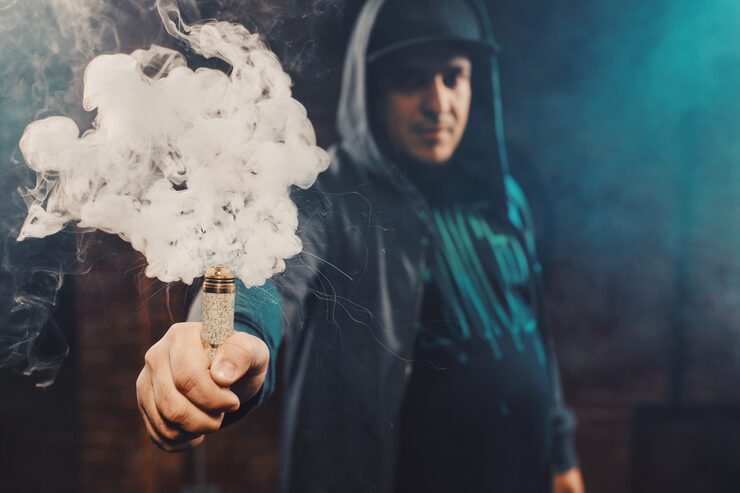
Nearly everyone who tries vape tricks hits the same wall early on — the trick looks simple in a video, but the cloud comes out thin, breaks apart too fast, or just doesn’t form the way it’s supposed to. Almost none of that comes down to talent. It comes down to a handful of fixable technical mistakes that show up over and over.
Mistake One: Not Enough Vapor Density
The single biggest reason tricks fall flat is vapor that’s too thin to hold its shape. Dense clouds come from higher VG e-liquid, sufficient wattage for the coil being used, and a slow, full inhale that pulls enough vapor into the lungs before exhaling. Trying advanced tricks on a low-wattage pod system with high-PG juice is fighting the wrong equipment for the job — the vapor simply won’t have the density needed to hold a ring or a wave.
Mistake Two: Exhaling Too Fast
- The fix is patience: most trick failures come from exhaling in a rush, which scatters vapor before it has a chance to form a cohesive shape.
- O-rings specifically need a controlled push: a sharp cough-like exhale from the back of the throat, not a steady stream from the lungs, is what actually shapes a ring.
- Waves and ropes need the opposite: a slow, steady release paired with hand movement, since rushing the exhale breaks the vapor stream before the hand motion can shape it.
Mistake Three: Wrong Head and Jaw Position
Tricks like the O-ring depend heavily on tongue and jaw positioning that most beginners get backward. The tongue should sit toward the back of the mouth, creating a rounded chamber, while the jaw stays relatively still. Pushing vapor out with the cheeks alone, without engaging the throat, tends to produce weak, wobbly rings that dissipate within a second instead of holding form and traveling.
Mistake Four: Rushing the Learning Curve
Nearly every trick tutorial skips a step that matters more than any hand technique: practicing with no vapor at all first. Dry runs — practicing the exhale and jaw movement without actually vaping — let you isolate the mechanics of a trick without wasting e-liquid or getting frustrated by clouds that fail for reasons unrelated to the shaping technique itself. Most experienced trick-vapers spent more time on dry practice than most beginners expect.
Mistake Five: Ignoring Airflow Settings
Airflow that’s wide open produces cooler, thinner vapor suited for flavor-chasing, not trick performance. Restricting airflow slightly increases vapor density and gives more control over the exhale, which matters far more for tricks than most people realize when they’re focused purely on hand technique. A device dialed for maximum airflow is working against the vapor density that most tricks depend on.
Putting It Together
Weak clouds are rarely a hand-coordination problem — they’re an equipment and technique mismatch. Dense enough vapor, controlled exhale speed matched to the specific trick, correct jaw and tongue positioning, and airflow tuned for density rather than smoothness are what actually separate a wobbly attempt from a clean, held shape.
A Realistic Practice Routine
Progress on tricks tends to come in short, frequent sessions rather than one long practice marathon. Ten focused minutes a day, working on a single trick at a time instead of jumping between several, produces noticeably faster improvement than occasional hour-long attempts at everything at once. Recording short clips of each attempt also helps more than most beginners expect — it’s far easier to spot a jaw or exhale timing issue on video than to feel it in the moment.
Note:- This article is for general informational purposes only. Vaping carries health risks, and trick performance should never come at the expense of safe device use.
